Husky in Watercolor: A Designer’s Review for Dogs & Crafts
When a client brief lands on my desk asking for a warm, approachable visual identity for a pet-centric brand, I immediately think of soft, hand-painted textures. The Husky in Watercolor asset caught my attention because it balances the striking silhouette of a husky with the tender, flowing quality of watercolor pigments. It’s not just a clipart cutout—it feels like a genuine illustration that could anchor a handmade business’s product line or elevate a craft project with instant emotional appeal. As a digital product, it arrives in a clean bundle: SVG, transparent PNG, EPS, and DXF, which immediately tells me it was prepared with multiple creative workflows in mind.
First Impressions: A Soft, Painterly Husky That Speaks a Quiet Visual Language
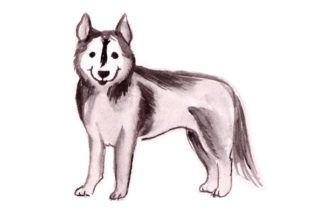
Opening the transparent PNG first, I was struck by how the washes of grey, white, and subtle blue bleed into one another without losing the husky’s unmistakable features. The eyes—those piercing, intelligent pools—are rendered with enough restraint that they don’t become cartoonish. This is a graphic design asset that leans toward the editorial and illustrative rather than the mass-produced. The watercolor edges are organic, slightly uneven, which gives it a tactile, handcrafted feel. For a brand that wants to communicate warmth, trust, and a personal touch, this illustration does the heavy lifting before a single word of copy is written.
The mood is gentle, almost nostalgic, reminiscent of a well-loved storybook. It could easily belong to a boutique pet portrait studio, a natural dog treat company, or a small business branding its packaging with soul rather than sterile perfection. The style is modern but not minimal; it embraces the imperfections that make watercolor art so compelling. It’s a ready-made focal point for a creative design that needs to feel authentic and slightly artisanal.
Why This Asset Works for Handmade Dog Brands and Crafters
In my practice, I often work with clients who sell on Etsy, run print-on-demand shops, or create custom Cricut projects. The Husky in Watercolor is a rare find because it bridges the gap between a fine art illustration and a usable printable design. For a craft business owner, this means you can drop it into a Canva template for a thank-you card, size it up for a tote bag sublimation design, or use the DXF to cut a heat transfer vinyl decal—all without losing the delicate watercolor texture. The fact that the file pack includes a vector SVG and EPS makes it genuinely versatile. You can recolor isolated areas, adjust opacity, or even convert the washes to a single solid silhouette if needed, though I’d argue the charm lies in the original brushwork.
For commercial design uses, the transparent PNG is a lifesaver. I placed it on a kraft paper product mockup for a hypothetical small-batch dog biscuit brand, and the result was instant packaging magic. The watercolor husky sat beautifully against the textured background, creating a high-end, organic look that felt both premium and approachable. This is exactly the kind of graphic design asset that can elevate a handmade business from looking like a hobby to a cohesive brand.
Testing the Watercolor Husky in Real Client Mockups
To evaluate real-world performance, I ran a series of mockups: a rectangular sticker design, a mug print, a social media post for Instagram, a hero graphic for a pet blog, and a label for a candle jar. In larger layouts, the husky commanded attention without overwhelming the composition. Its soft edges let it breathe; you can place it over a subtle gradient or a soft background texture and still maintain visual hierarchy. The watercolor washes naturally draw the eye toward the face, making it a strong candidate for hero graphics, product labels, and even editorial design where you need a gentle, emotive opener.
In a Canva template for a Pinterest pin, the husky paired wonderfully with a handwritten font. The combination felt curated and intimate, perfect for a small business branding social campaign. The asset’s transparency meant I could layer it over a muted background color and still see the paper-like texture of the watercolor, which added depth. It’s not just a flat illustration—it has character.
Design Scenarios Where the Husky Shines
This illustration excels in projects that celebrate the beauty of dogs while maintaining a soft, feminine, or artisanal edge. Here are the contexts where it performs best:
- Packaging design for dog treats, grooming products, or pet-themed candles.
- Social media graphics that need a hand-drawn focal point without overwhelming the viewer.
- Sticker design and laptop decals, especially kiss-cut stickers where the watercolor edge becomes a design feature.
- T-shirt design for pet lovers, using a specialty print method that preserves subtle color gradients.
- Printable wall art for a nursery, vet clinic, or pet-friendly cafe.
- Blog visuals and editorial headers for dog-related content.
- Cricut projects like tote bags, pillows, or wood signs using the DXF or SVG with a slight offset to keep the wash intact.
- Product mockups where you need to quickly concept a brand identity around a specific dog breed.
In all these cases, the digital product functions as a primary visual element, not just a decorative afterthought. It commands attention, sets a mood, and tells a story about the brand’s values—caring, quality, and a personal touch.
When to Use This Asset with Caution
No design asset is universal, and the watercolor style does come with some practical limitations. First, the delicate washes can lose readability at very small sizes—think booking icons, email signatures, or tiny app buttons. When scaled down, the husky’s features may blur together, and the overall impact becomes muddy. I’d avoid using it as a logo mark unless you’re prepared to simplify the watercolor into a more graphic silhouette, which would require editing the SVG and might strip away the very texture that makes it special.
It also struggles on busy, high-contrast backgrounds. Placing the husky over a dark, chaotic pattern can make the soft edges look unintentional rather than artistic. The transparent PNG works best on lighter, solid backgrounds where the interplay of washes remains visible. If you’re designing a minimalist, corporate brand, this asset might feel too expressive and hard to align with a rigid grid system. It’s not a Swiss-style graphic; it’s a heartbeat.
Additionally, printing with delicate watercolor gradients requires a reliable printer. On-demand print products like mugs or apparel might struggle with subtle color transitions unless you use a high-quality print provider. Always test a sample before committing to a full run.
How the Watercolor Style Affects Brand Perception
From a brand identity perspective, the Husky in Watercolor immediately shifts the tone toward warmth, friendliness, and approachability. It lacks the sleek, corporate feel of a vector icon, but that’s its strength. It builds emotional trust—viewers perceive the brand as caring, possibly family-run, and deeply connected to the animals it represents. This is a crucial point for craft businesses and small business owners who want to stand out in a creative marketplace crowded with generic stock photos.
When paired with a soft serif or a casual handwritten font, the asset reinforces a handmade, artisanal vibe. If you match it with a clean sans serif, you create a modern yet human contrast that can work beautifully for a contemporary pet brand. The visual hierarchy is easy to maintain because the husky’s face naturally pulls focus; supporting text can sit comfortably beside or beneath it without fighting for attention. The organic watercolor also plays well with other design assets like botanical illustrations or soft geometric patterns, giving you room to build a textured, layered composition.
Practical Designer Checks Before Commercial Use
Before integrating any commercial design asset into a client project, I run through a standard checklist. For the Husky in Watercolor, here’s what I’d recommend:
- Test in black and white. Convert the image to grayscale to see if the contrast holds up. The watercolor washes may lose definition, so plan for alternative layouts if the design might appear in monochrome.
- Check contrast on light and dark backgrounds. The husky’s grey tones can disappear on mid-grey or dark backgrounds. A light, off-white canvas often works best.
- Preview at multiple sizes. Scale it down to 100px wide and up to 1200px to ensure the watercolor detail remains pleasing. At thumbnail size, consider using a simplified version or a cropped detail.
- Place on real product mockups. The true test of any printable design is how it looks on a physical object. Envelope it on a curved mug, wrap it around a label, and print it on sticker paper to see how the edges behave.
- Inspect the file formats. The SVG and EPS are fully editable vectors, but the watercolor effect is likely embedded as a raster image within the vector container. That means you can scale infinitely, but you can’t edit the individual brush strokes as pure vectors. The transparent PNG is high-resolution and ready for digital use. The DXF is ideal for cutting machines, though you may need to simplify the design for clean weeding.
- Test font pairings. I matched the husky with a serif (Playfair Display), a sans serif (Montserrat), a script (Dancing Script), and a handwritten font (Caveat). The most successful combinations were the serif and handwritten styles, which echoed the traditional, personal feel of the watercolor.
- Verify commercial licensing. Always confirm that the license covers your intended use, especially for print-on-demand, Etsy products, or client work. The product description typically outlines what’s permitted, but if in doubt, reach out to the creator.
A Versatile Addition to Your Creative Toolkit
After thoroughly testing the Husky in Watercolor across multiple design scenarios, I can confidently say it’s a valuable creative design asset for anyone working in the pet, craft, or lifestyle niche. It’s not a one-size-fits-all solution, but when used intentionally, it adds a layer of emotion and artistry that generic vector clipart simply can’t match. The transparent PNG and SVG formats mean you can drag it into anything from a Canva template to a professional layout, and the DXF opens the door for physical crafters to create tangible, saleable products.
For the client project I was imagining—a small dog treat bakery rebranding its packaging and social media—this husky illustration would become the visual heart of the campaign. It would soften the brand, create a memorable first impression, and give every product label a storybook quality that speaks directly to dog lovers. Whether you’re a designer, a marketer, a blogger, or a Cricut enthusiast, this printable design deserves a spot in your resource collection. Just remember to treat it with the care its watercolor nature demands: let it breathe, pair it with intentional typography, and watch it transform a project from ordinary to emotionally resonant.