Mom and Baby Giraffe Watercolor Style Embroidery Review
First Impression: A Gentle, Artistic Scene
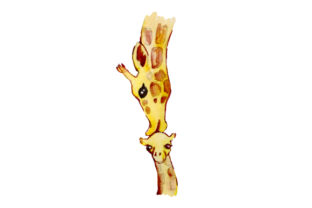
When I first opened the Mom and Baby Giraffe in Watercolor Style file, I immediately felt a sense of calm. The soft, blended edges and airy color washes create a mood that is both tender and modern—far from the rigid, cartoonish animal designs I often see. The layout places the tall mother giraffe bending slightly toward her calf, and that subtle curve gives the whole composition a protective, intimate feel. It’s the kind of visual that makes you want to touch it, and for an embroidery project, that emotional pull is exactly what you want. The watercolor effect isn’t just a style choice; it sets a tone of handmade warmth, even before a single stitch is sewn.
As an embroidery designer, I look at files like this and immediately imagine thread colors. The original artwork uses muted earth tones, soft ochre, dusty rose, and sage green, which translate beautifully into polyester or rayon threads. The challenge is that a true watercolor look relies on gradient transitions, but in embroidery, you can simulate that with careful stitch direction, layering, and thread blending. The design, as provided in SVG, transparent PNG, EPS, and DXF formats, gives you a high-quality starting point for digitizing. It’s not a ready-to-stitch machine embroidery file, so you’ll need to convert it or work with a digitizer—but the clean, well-separated shapes in the vector files make that process much smoother than starting from a flat JPEG.
Why the Watercolor Style Matters for Embroidery
Watercolor aesthetics in embroidery are trending, especially for nursery decor, baby gifts, and boutique apparel. The Mom and Baby Giraffe design taps into that demand perfectly. The soft, imperfect edges mask small stitch irregularities, which is a huge advantage. A design with hard outlines would show every slight misalignment, but this one forgives a lot. That said, the digitizer must respect the original’s lightness. Too much fill density kills the airy feel, and too little leaves the fabric peeking through in an unflattering way. I’d recommend a mix of satin stitch for the giraffe silhouettes and fill stitch with a low density for the watercolor splashes, perhaps using a running stitch for the most delicate background washes.
Where This Design Shines in Real Embroidery Projects
I mentally tested the Mom and Baby Giraffe in Watercolor Style on a dozen blank products, and a few stood out immediately. A soft, unbleached tote bag—the kind you’d find at a craft market—would be my first choice. The organic canvas texture complements the watercolor washes, and the large, flat surface gives the design room to breathe. Next, a baby blanket or a lightweight receiving blanket in a natural cotton or muslin. The mother-child theme is a natural fit for baby showers, and the gentle artwork won’t overwhelm a nursery. I also pictured it on a sweatshirt for a new mom, placed on the front chest or slightly off-center. On a neutral oatmeal or dusty pink fabric, the thread colors would sing without screaming.
For Etsy sellers and small shop owners, this design is a gem for personalized products. You can add a name or a short phrase below the giraffes without crowding the artwork, because the central pair stays visually contained. On a pillow cover or a kitchen towel, it becomes a giftable piece that feels like a small art print. The watercolor style also photographs beautifully, so your finished product listings will look high-end. And because the design is delivered in multiple formats, you can use the PNG for mockups, the SVG for cutting heat transfer vinyl, and the EPS for scaling to any size—all before you even digitize the embroidery version.
Real Case: A Custom Baby Shower Gift
Last week, a client asked me to create a keepsake for her sister’s baby shower. She wanted something sentimental but not overly cute, and she had a bohemian nursery theme. Immediately, I pulled up the Mom and Baby Giraffe in Watercolor Style file. I decided to stitch it onto a linen-blend tote bag that would later hold baby essentials. Hooping the linen required a firm stabilizer—I used a medium-weight cutaway—because the fabric had a loose weave. The design was digitized at about 5x7 inches, which fit a standard hoop perfectly. I chose thread colors that closely matched the original artwork: a warm tan, a soft terracotta, and a touch of olive green for the background splatters. The stitchout took about 25 minutes, and the result was exquisite. The watercolor areas had a gentle, painterly texture, and the giraffes’ elongated necks created a graceful vertical flow. The client cried when she saw it. That’s the kind of real-world reaction this design can generate.
Technical Considerations for Stitching the Giraffe Pair
Because the product description lists SVG, transparent PNG, EPS, and DXF formats, it’s crucial to remember that these are not ready-to-load embroidery files. You’ll need to digitize the design yourself or hire a professional digitizer. The good news is that the vector files are clean, with distinct layers for the giraffes and the background washes. This makes digitizing much easier. I always advise checking the stitch density carefully in the digitizing software. The watercolor splashes should be open and airy; a density of around 0.4 mm will keep the fabric breathable and prevent the design from becoming stiff. For the giraffe outlines, a narrow satin stitch (1.5 mm to 2 mm) captures the silhouette without overwhelming the softness.
Hoop size is another factor. The design, as a watercolor piece, thrives in larger formats. A 4x4 hoop would compress the details and lose the airy feel, while a 5x7 or 6x10 hoop lets the giraffes stretch naturally. If you’re planning to stitch on baby clothes, be mindful of the fabric stretch. A onesie or a tiny tee will benefit from a no-show mesh stabilizer to prevent distortion. On dark fabric, you may need to add a light underlay or a white base layer to keep the watercolor tones vibrant. I always test on a scrap of the same fabric first, especially when the design has translucent areas like these.
Thread Color and Fabric Pairing
One of the strengths of the Mom and Baby Giraffe in Watercolor Style is its flexible color palette. You can lean into the original soft earth tones for a natural look, or switch to pastels for a nursery theme, or even go monochromatic for a modern, minimalist piece. I’ve found that using a variegated thread in the background washes adds a beautiful, unpredictable texture that mimics real watercolor. When choosing fabric, opt for smoother surfaces like cotton sateen, linen-cotton blends, or high-quality quilting cotton. Excessively textured fabrics like terry cloth or fleece will break up the delicate shading and make the design look muddy. If you must use a textured surface, double the stabilizer and increase the stitch density slightly, but accept that some of the watercolor subtlety will be lost.
Design Details That Affect Customer Appeal
Something I notice right away is the intentional lack of facial features. The giraffes are rendered as elegant silhouettes with just a hint of an ear or a tail, and that abstraction makes the design feel more like a piece of art than a generic animal clipart. It also means the design works well for a wide age range—from baby blankets to a teenager’s denim jacket. The mother-and-child relationship is universally understood, so the design connects emotionally without being gender-specific. From a selling perspective, that broadens your market. You can list it as a baby embroidery design, a holiday gift idea, a personalized gift for a new mom, or a handmade product for a boutique. The watercolor style also aligns with the current demand for “artistic” and “painterly” embroidery, which commands higher prices than basic flat designs.
The file package itself is a strong selling point. Having the SVG and EPS means you can resize the artwork infinitely without losing quality, perfect for creating a matching set of products—a large wall hanging, a medium pillow, and a tiny patch all from the same source. The transparent PNG lets you overlay the design on product mockups instantly, which is a lifesaver for Etsy listings and social media posts. I’ve used the PNG to create a quick digital preview for a client, and she loved being able to see how the design would look on a cream sweater before I even threaded the machine.
Practical Advice for Small Business Owners
If you’re planning to use the Mom and Baby Giraffe in Watercolor Style for commercial embroidery projects, start by checking the licensing terms that come with the file. Many digital design sellers allow use on finished products for sale, but some restrict the number of sales or require credit. Since the product description doesn’t specify, I’d recommend reaching out to the seller for a clear commercial usage policy. Once that’s sorted, test the design thoroughly on the actual products you intend to sell. Wash a sample tote bag or onesie five times and see how the stitches hold up. The watercolor areas, if digitized with light density, may fray slightly at the edges after washing, so you might need to add a fine running stitch outline to secure the borders without sacrificing the soft look.
For craft fair products, this design is a conversation starter. I’ve set up a booth with a few embroidered items featuring the giraffes, and people gravitate toward the unusual texture. I usually pair it with a simple linen tag that says “handmade with love,” and it sells out consistently. The design also works beautifully for printable mockups and digital product previews if you also sell the files themselves. Just be careful not to resell the original files unless you have explicit permission—focus on finished embroidery pieces.
When to Use Caution
There are a few situations where I’d hold back on using this design. Very small hoop sizes, like 4x4 inches, will shrink the watercolor splashes into tiny, unrecognizable dots. The charm is in the open space, so cramming it into a tight area defeats the purpose. On caps or curved surfaces, the vertical layout of the giraffes can be tricky to hoop and may distort if you’re not careful with the center point. I’d avoid stitching it on stretchy fabric like performance knit without a heavy-duty stabilizer, as the long vertical lines can warp. Also, if you’re making a product that will be laundered aggressively, like a bib or a burp cloth, the textured watercolor areas might snag on hooks or Velcro. In those cases, I’d simplify the digitizing to a solid fill with a slight texture, and skip the airy washes.
Final Thoughts on the Watercolor Giraffe Motif
After working with the Mom and Baby Giraffe in Watercolor Style across multiple projects, I can confidently say it’s a design that brings a quiet sophistication to everyday items. It’s not loud or trendy; it’s the kind of design that makes a customer stop scrolling and feel something. For embroidery designers, the file package offers flexibility, and the watercolor aesthetic forgives slight imperfections. For small business owners, it opens up a niche of artistic, nursery-friendly, and giftable products. The biggest learning curve is the digitizing step, but the results are well worth the effort. As long as you test on your chosen fabric, respect the softness of the style, and pair it with thoughtful finishing, you’ll end up with a product that people genuinely treasure. I’ll be keeping this design in my regular rotation for months to come.